The signs in plain terms
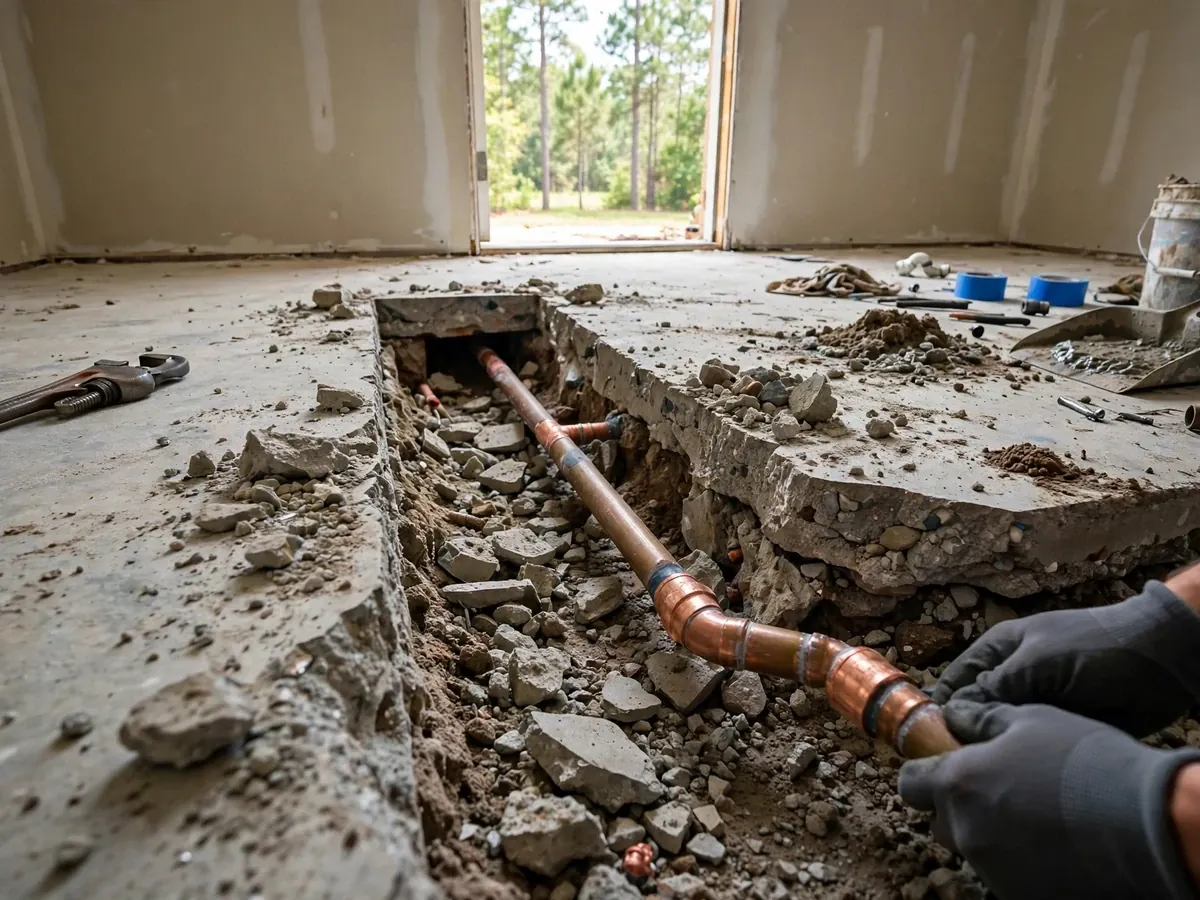
A slab leak is a break or pinhole in a water line that runs under or inside the concrete floor of your home. The clearest warning signs are a water meter that keeps moving with everything off, a warm patch on the floor, the sound of running water in a quiet house and a water bill that climbs without explanation.
None of these proves a slab leak on its own. Together, they are strong evidence, and a plumber with the right equipment can confirm it without breaking up your floor.
Slab leak warning signs to watch for
- The water meter dial or leak indicator keeps moving when every fixture is off.
- A warm or hot spot on the tile or carpet, often where a hot line runs under the floor.
- The sound of rushing or hissing water when the house is quiet.
- A water bill that rises for no reason you can name.
- Damp carpet, lifted flooring or a musty smell with no visible source.
- Cracks in grout or tile that appear along a line.
- Low water pressure across the house, or hot water that arrives slowly.
- Water pooling outside near the foundation or along the slab edge.
The ten-minute meter test
This check tells you whether water is leaving the house through a line you cannot see. It does not say where, and it cannot separate a slab leak from a leak in the yard.
- 1Stop all water useTurn off taps, dishwashers, washers and ice makers. Make sure nobody flushes a toilet.
- 2Find the meterIt is usually in a box near the street. Lift the lid carefully and watch for insects.
- 3Read the leak indicatorMany meters have a small triangle or dial that spins when any water moves. Note the position.
- 4Wait and look againWait 15 to 30 minutes with no water used. If the dial moved or the numbers rose, water is going somewhere.
- 5Rule out the easy causesListen for a running toilet and check for dripping outdoor spigots or irrigation. If you find none, call.
Why slab homes in Estero are worth watching
What to do first
Safe first moves
Shut off the main
Close the main shutoff valve at the house. That stops the leak if the line is under pressure.
Watch for electrical risks
If water is near outlets, appliances or a panel, stay away and turn off power only if you can reach the breaker dry.
Smell for gas
If you smell gas, leave the house and call the gas utility from outside. Do not use switches or phones inside.
Document it
Take photos of wet spots, the meter and any damage. Your insurer may ask for them.
Meter moving with everything off? Call and we will plan the next step.
Call (239) 522-0887How a plumber confirms a slab leak
We start with the pressure and flow clues you give us, then use listening equipment, thermal imaging or a pressure test to narrow it down. The goal is a precise spot, so the repair opens as little floor as possible. Leak detection is the step that tells you what you are dealing with.
If the line is confirmed, the options are usually a spot repair, rerouting the line through the walls or ceiling or replacing the whole run. We lay out the choices and the reasons before any work starts. The details are on our slab leak repair page.
| What you notice | Could be a slab leak | Could be something else |
|---|---|---|
| Warm floor spot | A hot line leaking under the slab. | Radiant heat, sunlight or a nearby appliance. |
| High water bill | A steady loss you cannot see. | A running toilet, irrigation or a guest stay. |
| Low pressure | A break that bleeds pressure. | A clogged aerator or a utility issue. |
| Wet carpet or flooring | Water rising from below. | A spill, a leaking appliance or roof water. |
| Hissing sound | Water escaping a pressurized line. | A toilet fill valve or a faucet seal. |
What affects the cost of a slab leak fix
Factors that move the price
- Finding the leak
- Locating the break precisely saves time later. Tools and technician time are part of the visit.
- Depth and location
- A line near a wall is easier than one in the middle of a finished room.
- Repair method
- A spot repair, a reroute and a full replacement differ in work and materials.
- Floor finish
- Tile, wood and carpet all affect how the opening is patched afterward.
- Damage to dry out
- Wet subfloor or drywall adds drying and repair work.
You get a clear price before work starts, with the options explained in plain language.
Want your real number? Call (239) 522-0887.
Things you should not do
- Do not drill or saw into the slab to look for the pipe.
- Do not assume a high bill is only usage. Check the meter first.
- Do not pour drain chemicals into any line hoping to clear a leak.
- Do not ignore a warm floor spot. Hot water lines under a slab leak quietly and constantly.
- Do not wait if the main shutoff will not close. That is an emergency.
Licensed plumbers do this work in Florida, and you can verify a licence at myfloridalicense.com. Permit rules for slab work vary, so ask the Village of Estero Community Development department. We also serve nearby areas, including Bonita Springs, if you manage a property there.
The same signs apply in San Carlos Park, so run the meter test before you assume a high bill is a billing error.
Slab leak questions
Often a higher water bill or a meter that moves with everything off. A warm spot on the floor or the sound of water in a quiet house is also common.
You can test for one with the meter. You usually cannot pinpoint it. That takes listening equipment, a pressure test or thermal imaging.
If water is spreading or the floor is wet, shut off the main and call. A slow leak is less urgent but still damages the slab and wastes water.
No. Some leaks run for weeks with only a bill change or a faint sound. That is why the meter test matters.
Sometimes, but not always. We pinpoint the leak first so any opening is small. Rerouting the line is another option.
Coverage varies by policy. Ask your insurer, and keep photos and the plumber's notes.
A warm patch on a normal day, especially along a hot water line, is a strong clue. A plumber can confirm with a camera or thermal check.
Still deciding? Call (239) 522-0887 any hour and talk it through.