A two-minute check you can do yourself
- 1Turn everything offClose every tap, stop the dishwasher and washer, and make sure no one is flushing.
- 2Read the meterFind the meter box, lift the lid and look for a spinning dial or a leak indicator. Note the reading.
- 3Wait and look againCheck after fifteen minutes. If the number has moved, water is going somewhere.
- 4Check toiletsA drop of food coloring in the tank shows a silent toilet leak if it reaches the bowl without flushing.
- 5Shut off the main if you mustIf water is visibly escaping, close the main valve and call us.
Meter still running with everything off? Call and we will start tracking it down.
Call (239) 522-0887How a plumber actually finds the leak
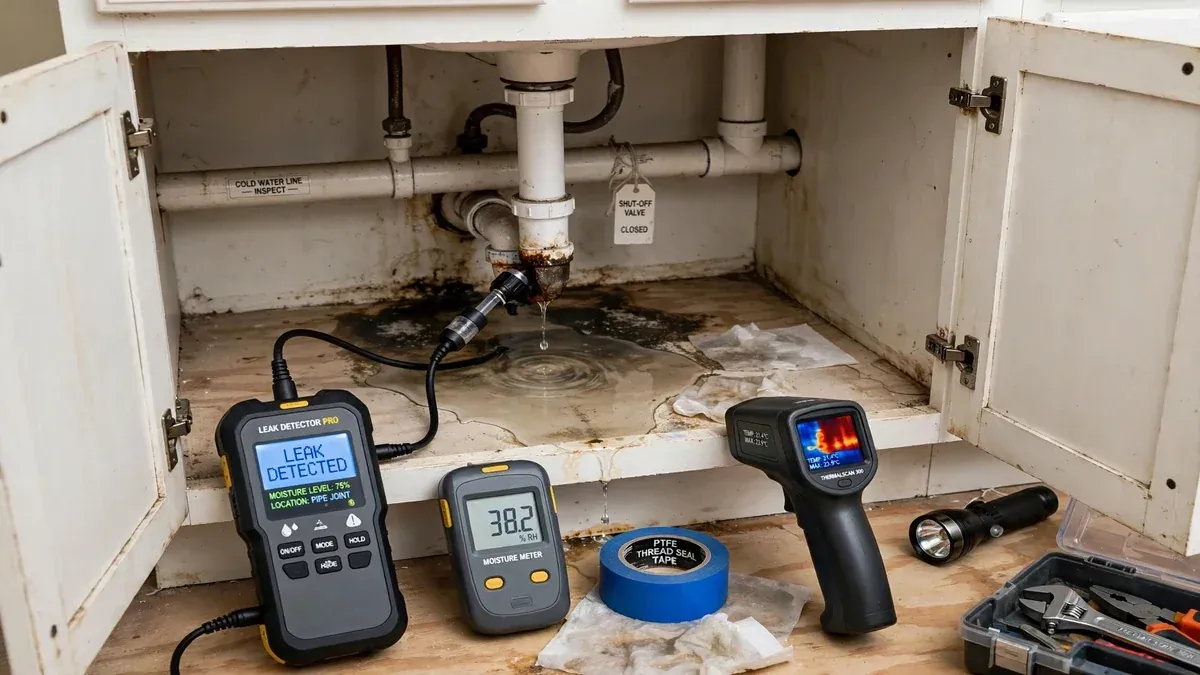
Finding a leak is a process of elimination. A pressure test on the supply lines shows whether the leak is on the house side. Acoustic listening equipment picks up the sound of water escaping from a pressurized pipe. A thermal camera can show temperature changes where hot lines leak behind a wall.
Equipment narrows the search, but a person decides what the readings mean. We cannot name the spot from the phone, and we will tell you if a first pass does not settle it. If the leak turns out to be under a concrete floor, see slab leak repair.
| Location | Common clue | Method |
|---|---|---|
| Inside a wall | Stain or damp drywall | Thermal camera, moisture meter, listening. |
| Under a slab | Warm floor spot, high bill | Pressure test and acoustic listening. |
| Underground supply line | Wet yard, meter movement | Isolation testing and listening. |
| Fixtures and valves | Slow drip, damp cabinet | Visual check and moisture reading. |
| Drain or sewer line | Musty smell, soft ground | Camera inspection of the line. |
What drives the cost of leak detection
What changes the number
- Size of the search
- A single bathroom wall is a smaller search than a whole house or a multi-unit building.
- Method needed
- Listening, pressure testing and thermal imaging are different tools with different time needs.
- Access
- Finished floors, cabinets and landscaping make it harder to reach a pipe.
- Repair afterward
- Finding the leak is one step. Opening a wall or slab to fix it is quoted separately.
- Time of call
- After-hours visits are emergency work.
We give you a clear price before work starts, and we explain the steps if finding the leak leads to a repair.
Want your real number? Call (239) 522-0887.
Leak risks around Estero
What happens once the leak is found
We mark the location, explain what it means, and give you the repair options. Some fixes are a short repair at an accessible spot. Others mean opening a wall, a floor or the yard.
If a drain or sewer line is the suspect, we may suggest a camera look through drain cleaning equipment first. We serve the Village of Estero, Bonita Springs and San Carlos Park.
Bill climbing and no wet spot in sight? Call and we will help you narrow it down.
Call (239) 522-0887Leak detection questions
Compare your usage month to month. If the bill rises without a change in habits, run the meter check above. A moving dial with everything off means water is leaving somewhere.
Often, yes. Moisture meters, thermal cameras and listening tools narrow the area. A final decision about opening the wall comes after that.
Yes. We isolate sections of the line and listen for escaping water. Results depend on soil, pipe material and noise, so we explain what we find.
Yes. Once the leak is located, we explain the repair and the price before any work starts.
Close the main valve if water is escaping. Move belongings out of the wet area and photograph the damage for your insurer.
Policies differ, so ask your insurer. We can describe what we found in plain terms for your claim.
Yes. Landlords and managers often call for tenant reports. Tell dispatch the number of units and which areas show water.
Still deciding? Call (239) 522-0887 any hour and talk it through.