Yes, a slab house can be repiped
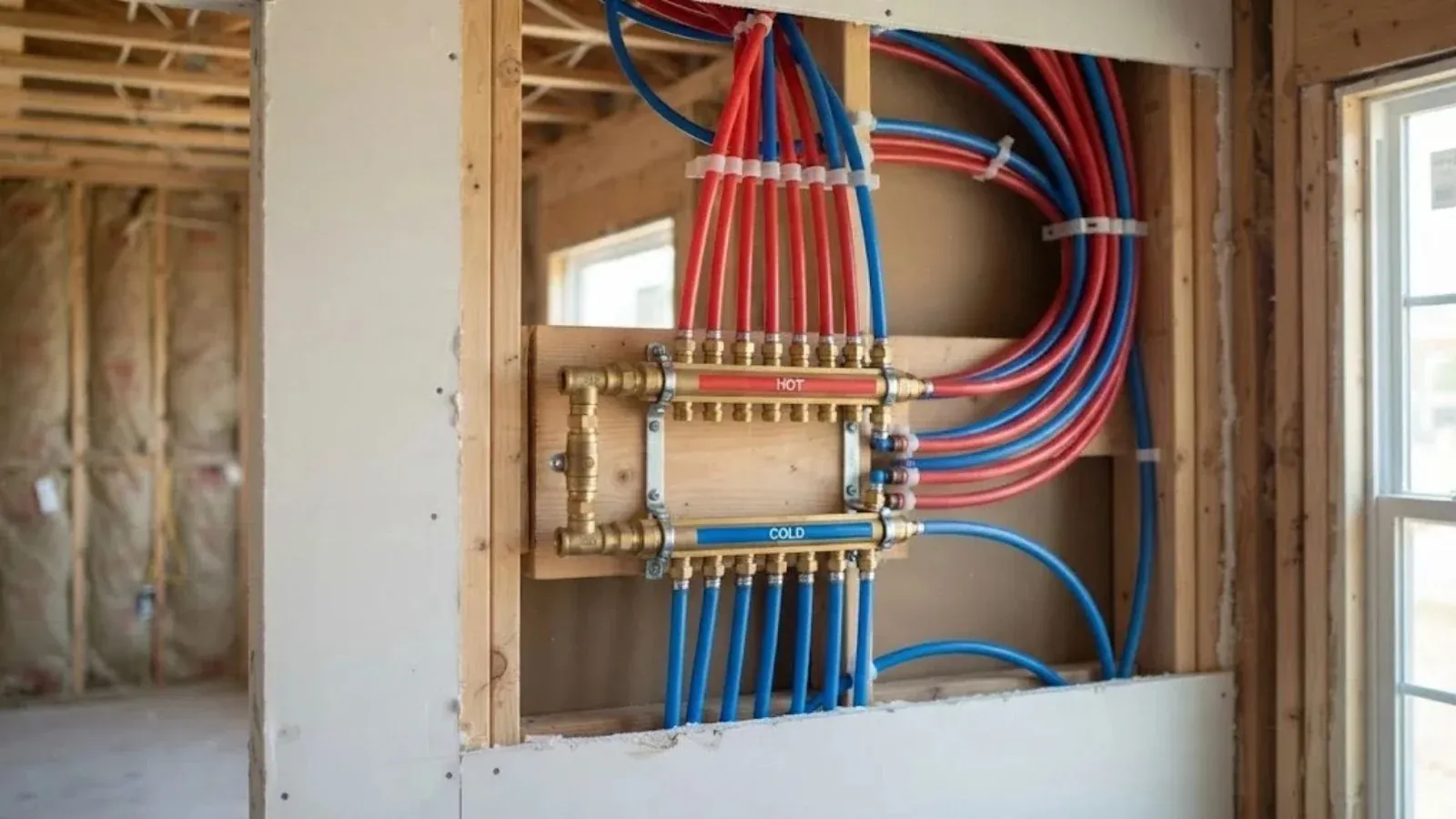
A house on a concrete slab can be repiped, and most are done without breaking up the floor. The usual method runs new water lines through the attic or the walls and abandons the old lines under the concrete. The new system reaches every fixture, while the slab stays intact.
The drain lines are a separate question. Those also run under the slab, and replacing them is a bigger project. A camera inspection tells you whether they need work at all.
Three ways to handle the pipes
| Approach | How it works | Trade-off |
|---|---|---|
| Reroute through attic or walls. | New supply lines run overhead or inside walls. The old slab lines are capped. | Avoids breaking the floor. Opens drywall at some points. |
| Replace under the slab. | The slab is cut, trenches are dug and new pipe is laid. | Keeps the original layout. Heavy, messy and slow. |
| Spot repair. | One failed section is fixed or bypassed. | Cheapest in the short run. Does not stop the next failure. |
Most homeowners with a failing slab system choose the reroute. It is faster than cutting concrete and keeps the new pipes where a plumber can reach them later.
Signs a repipe is worth considering
When repiping makes more sense than another patch
- You have had more than one leak in the same system.
- Water comes out discolored, brown or with a metallic taste.
- Pressure is low at several fixtures, not just one.
- The pipes are a type with a known history of failure in your area. Ask a plumber what is behind your walls.
- A leak was found under the slab and more pinholes are likely.
- The house is old enough that the original lines are near the end of their life.
If you are not sure whether one leak or many, start with leak detection. Knowing where the water is going keeps you from replacing a whole system for a single failure.
What the job looks like
- 1Inspect and planThe plumber maps fixtures, the water heater, the main and the route the new pipe will take.
- 2Price and scheduleYou get a clear price before work starts, along with a plan for the days the water will be off.
- 3Protect the houseFloors, furniture and fixtures get covered. Access points in drywall are marked.
- 4Run the new linesNew pipe goes in through the attic, walls or the chosen route and connects to each fixture.
- 5Test under pressureThe system is filled and pressure tested to check every joint before walls are closed.
- 6Patch and clean upOpenings in drywall are patched and the old shutoffs and connections are capped or removed.
Leaks keep coming back in your slab house? Call for a repipe plan.
Call (239) 522-0887Estero homes and what the age means
Materials and code
Common modern choices for water supply lines are PEX, copper and CPVC. Each has trade-offs in cost, durability and installation. A plumber should explain which suits your house and why.
The Florida Building Code, Plumbing, 8th Edition took effect on December 31, 2023, and permits applied for after that date follow it. Repiping is often permitted work, but rules vary, so ask the Village of Estero Community Development department. San Carlos Park is unincorporated, so San Carlos Park homeowners should ask Lee County.
What drives the cost
Factors that move the price of a repipe
- Size of the house
- More bathrooms and fixtures mean more pipe and more connections.
- Pipe material
- PEX, copper and CPVC differ in material cost and labor.
- Route and access
- Open attic space is quicker than tight walls or finished ceilings.
- Drywall patching
- Every access hole needs patching and paint touch-up.
- Water heater and fixtures
- Old shutoffs, valves and connections are usually replaced during the job.
- Permit and inspection
- Permit and inspection fees vary, so ask the Village or the county.
We give you one clear price before work starts, with the scope in plain language.
Want your real number? Call (239) 522-0887.
Questions to ask before you hire
- Which pipe material do you recommend for my house, and why that one?
- Where will the new lines run, and which walls or ceilings will you open?
- Who pulls the permit, and who schedules the inspection?
- What happens to the old lines under the slab, capped or left in place?
- How long will the water be off, and on which days?
- Is drywall patching included, and does painting fall to me?
A good plumber answers these without hesitation and puts the scope in writing before work starts. If an answer is vague, keep asking until it is not.
Honest limits and DIY
A whole-house repipe is not a weekend DIY project. It involves pressure testing, shutting down the main supply, permit handling and careful work around the water heater. Mistakes show up as leaks inside finished walls.
You can help by clearing access, noting where leaks have happened and checking your plumber's licence at myfloridalicense.com. If a slab leak is the trigger, our slab leak repair page explains when a spot fix is enough.
Owners in Bonita Springs who spend part of the year away can plan repiping around their absence, since the water has to be off for a stretch.
Repiping a slab house, answered
Yes. The usual approach runs new lines through the attic or walls and caps the old ones under the slab. The floor stays intact.
Not for a reroute. You only break the slab if you choose to replace lines under it, which is less common.
They are separate from the supply lines. A camera inspection shows whether they need repair.
That depends on the size of the house and the route. Larger homes and tight access take longer. Ask your plumber for a schedule before you commit.
If you have repeated leaks or aging pipes, repiping usually makes more sense. A single leak with healthy pipes can be repaired.
Most people stay, but water may be off for part of the day. Plan for that, and ask your plumber for the schedule.
Often, but rules vary. Ask the Village of Estero Community Development department, and ask your plumber who files it.
Still deciding? Call (239) 522-0887 any hour and talk it through.