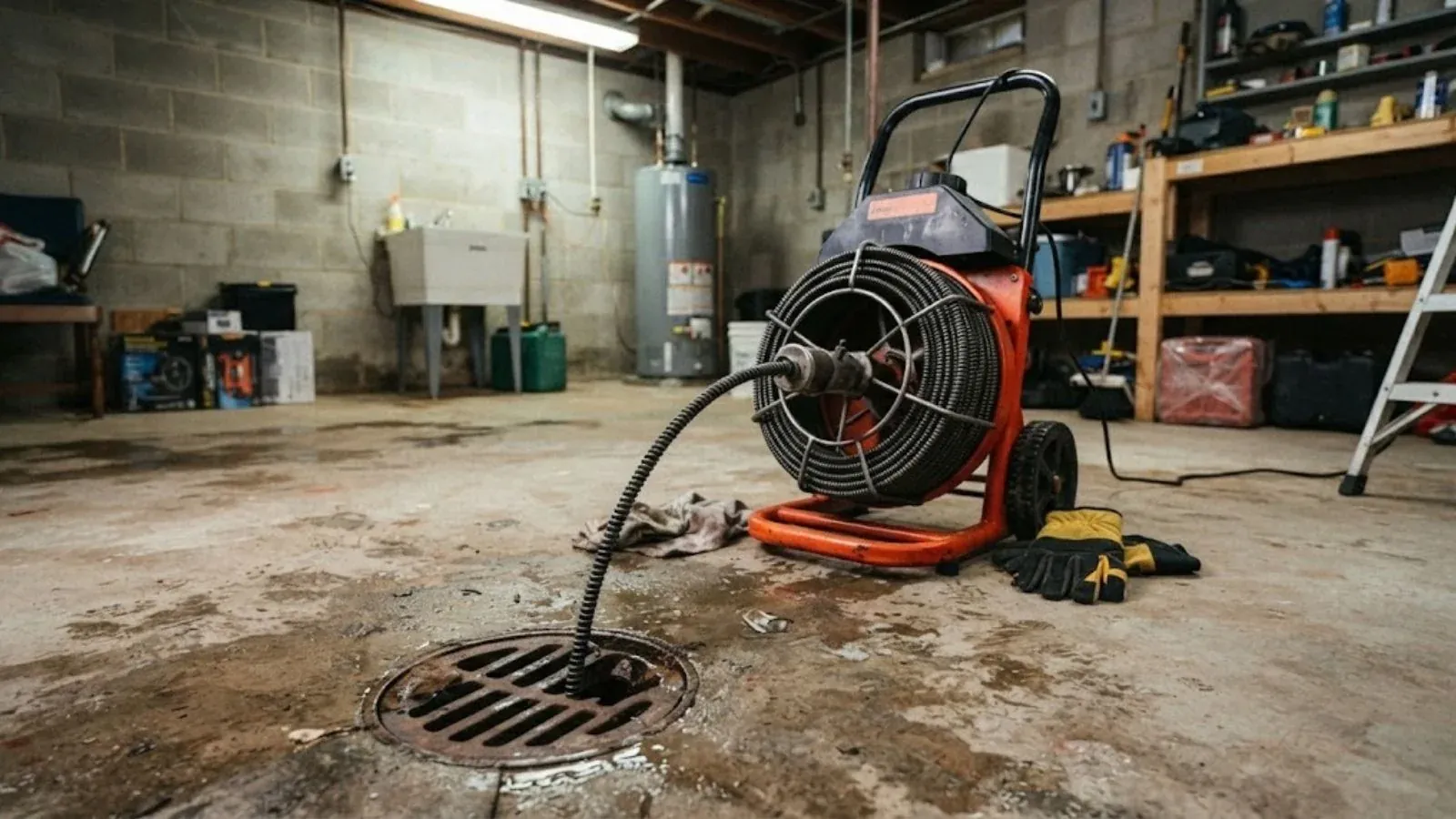
The usual suspects, in short
Most clogs come from a handful of things: grease and food in kitchen lines, hair and soap in bathroom lines, wipes and paper products in toilets, and tree roots or damaged pipe in buried drains. The cause usually shows in where the problem appears.
One slow sink usually means a local clog in that fixture's trap or branch line. Several fixtures slowing at once, or gurgling when another fixture drains, usually means a blockage further down the main line.
Where the clog is, by symptom
| What you notice | Likely location | Common cause |
|---|---|---|
| One sink or tub drains slowly | That fixture's trap or branch | Hair, soap scum, grease film. |
| Kitchen sink backs up, dishwasher too | Kitchen branch or disposal outlet | Grease, food scraps, coffee grounds. |
| Toilet gurgles when the shower runs | Shared drain or vent | Partial blockage or a vent problem. |
| Multiple fixtures back up together | Main sewer line | Roots, a belly in the pipe, heavy buildup, or collapse. |
| Sewage appears in the lowest tub or floor drain | Main sewer line | Full blockage downstream. Stop using water. |
| Slow drain keeps coming back after clearing | Pipe condition | Scale, damaged pipe or a cause the first clearing missed. |
Kitchen clogs: grease and what goes down the sink
Fat and oil look liquid when hot, then cool and cling to the inside of the pipe. Over months, food bits stick to that film and the opening narrows. Many callers describe a kitchen sink that clears for a week and then slows again, which is typical of a grease lining.
Coffee grounds, rice, pasta and fibrous scraps pack into drain lines even with a disposal. A disposal grinds food, but it does not stop the grease from coating the pipe downstream.
Bathroom clogs: hair, soap and wipes
Hair knots with soap scum and forms a mat near the top of a tub or shower drain. Pulling it out with a drain tool often fixes a slow tub. A plunger or a hand auger is safe for this level of problem.
Toilets clog from too much paper or from wipes labeled flushable. Those wipes do not break down the way toilet paper does. They gather in bends and snag other waste, which is a common reason a toilet clog returns.
Main line clogs: roots, belly and buildup
Roots grow toward moisture and work into joints, then thicken until they catch debris. A sag or belly in the pipe collects waste and creates a repeat clog. Old, cracked pipe lets soil in.
Florida homes sit on sandy soils, and shifting ground can open joints over the years. We cannot tell the cause from the phone. A camera inspection shows whether the line holds roots, a crack, a belly or just buildup. See sewer camera inspection for how that works.
Signs the problem is in the main line
- Several drains slow or back up at the same time.
- Gurgling from toilets or tubs when you run the washer or a sink.
- Sewage smell in the yard or near a floor drain.
- Water pooling around a cleanout or in the lowest tub.
- Clogs that clear and return within days or weeks.
Local angle: homes built in the 1990s and 2000s
Many Estero homes date from the late 1990s through the mid 2000s, so drain lines are often twenty to thirty-five years old. We do not assume a pipe material for a given community. Older lines simply have had more years to collect buildup, shift or let roots in.
Sewer service providers differ by address, and we have not verified which provider covers which area. Ask your utility who maintains the line past your property. Anything on your side of the property line is generally the homeowner's responsibility. Your bill or the utility can confirm the boundary.
What to try before calling
- 1Stop adding waterDo not run the dishwasher, washer or shower while a drain is backed up.
- 2Check how many fixtures are affectedOne fixture suggests a local clog. Several suggest the main line.
- 3Try a plunger on the affected fixtureUse a flat cup plunger for a sink or tub and a flange plunger for a toilet, and seal the overflow opening.
- 4Clear the visible gunkRemove the stopper or strainer and pull out hair or debris by hand with gloves.
- 5Call if it returns or spreadsA repeat clog or a second fixture slowing means the cause is deeper.
Water backing up into a tub or floor drain? Call now and stop running water.
Call (239) 522-0887What affects the cost of clearing a drain
Why the same symptom can lead to different bills
- Location of the clog
- A fixture trap is quick. A main line clearing takes more equipment and time.
- Cause of the clog
- Hair is simple. Roots or a collapsed pipe need cutting, jetting or repair.
- Method used
- Cabling, hydro jetting and camera work are different tools for different blockages.
- Access to a cleanout
- A clear cleanout saves time. Without one, the plumber may enter through a roof vent or a fixture.
- Repeat problems
- If a clog keeps returning, finding the cause adds a camera look to the visit.
We state a clear price before work starts, once we know how deep the problem is.
Want your real number? Call (239) 522-0887.
Fixing it, and keeping it from coming back
For a stubborn buildup, hydro jetting uses high-pressure water to scour the inside of the pipe instead of just poking a hole through the blockage. A camera look afterward shows whether the pipe is sound. If it is damaged, sewer line repair may be the lasting fix.
At home, keep grease out of the sink, use drain screens, and flush only toilet paper. We serve the Village of Estero and Bonita Springs around the clock.
The Florida Building Code, Plumbing, 8th Edition governs how home drains are vented and graded. A drain that keeps clogging after a clean clear may have a design or condition problem, and not only debris.
Houses built decades ago, as in San Carlos Park, have had longer for buildup to collect in the drain lines, so a repeat clog there is worth a camera look.
Clogged drain questions
In kitchens it is grease and food residue. In bathrooms it is hair and soap. In toilets it is excess paper or wipes. Buried main lines clog from roots, buildup or pipe damage.
A repeat clog usually means a cause the first clearing did not fix, such as a grease lining, a belly in the pipe or roots. A camera look can find it.
They can damage pipes and are hazardous to handle. Never mix them, and tell your plumber if you used one. A plunger or hand auger is a safer first try.
If multiple fixtures slow or back up at once, or a low tub or floor drain shows wastewater, the main line is the likely location.
Yes. Roots seek moisture and can enter through small cracks or joints. A camera inspection confirms whether roots are present.
It can be. Sewage coming up inside the house, or no working toilet, is urgent. A single slow sink can usually wait for a scheduled visit.
The homeowner is generally responsible for the line on their property. Ask your utility where its responsibility begins, since boundaries vary.
Still deciding? Call (239) 522-0887 any hour and talk it through.